Three doors into Warhammer 40,000, and you only need one
Warhammer 40,000 is really three hobbies wearing the same coat: a building-and-painting hobby, a tabletop game, and a sprawl of novels and video games set in the same universe. Beginners often try to walk through all three doors at once — buy a full army, download a mountain of rules, stall before the first model is even primed.
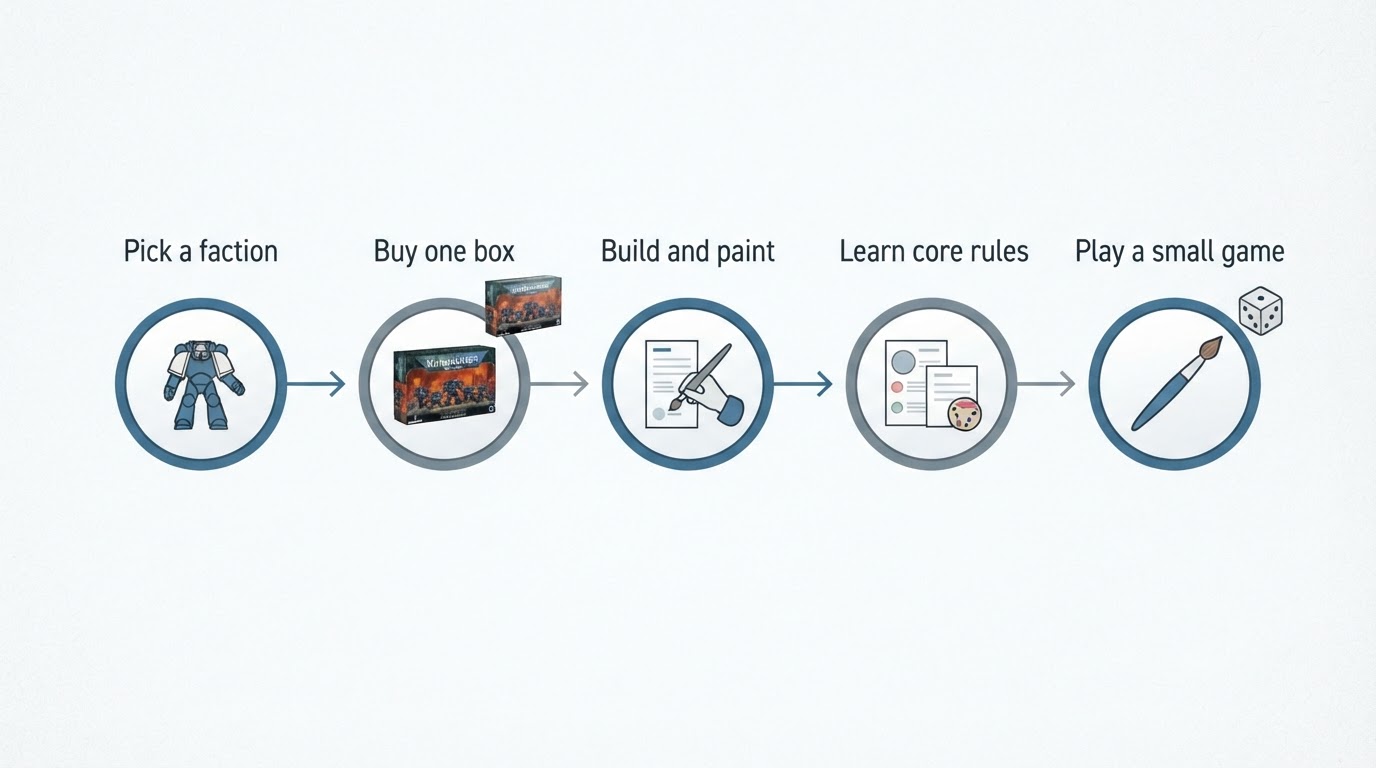
The practical path is short: pick a faction, buy one small box, build and paint it, learn the core rules, and play one small game. Everything after that is momentum you can build at your own pace.
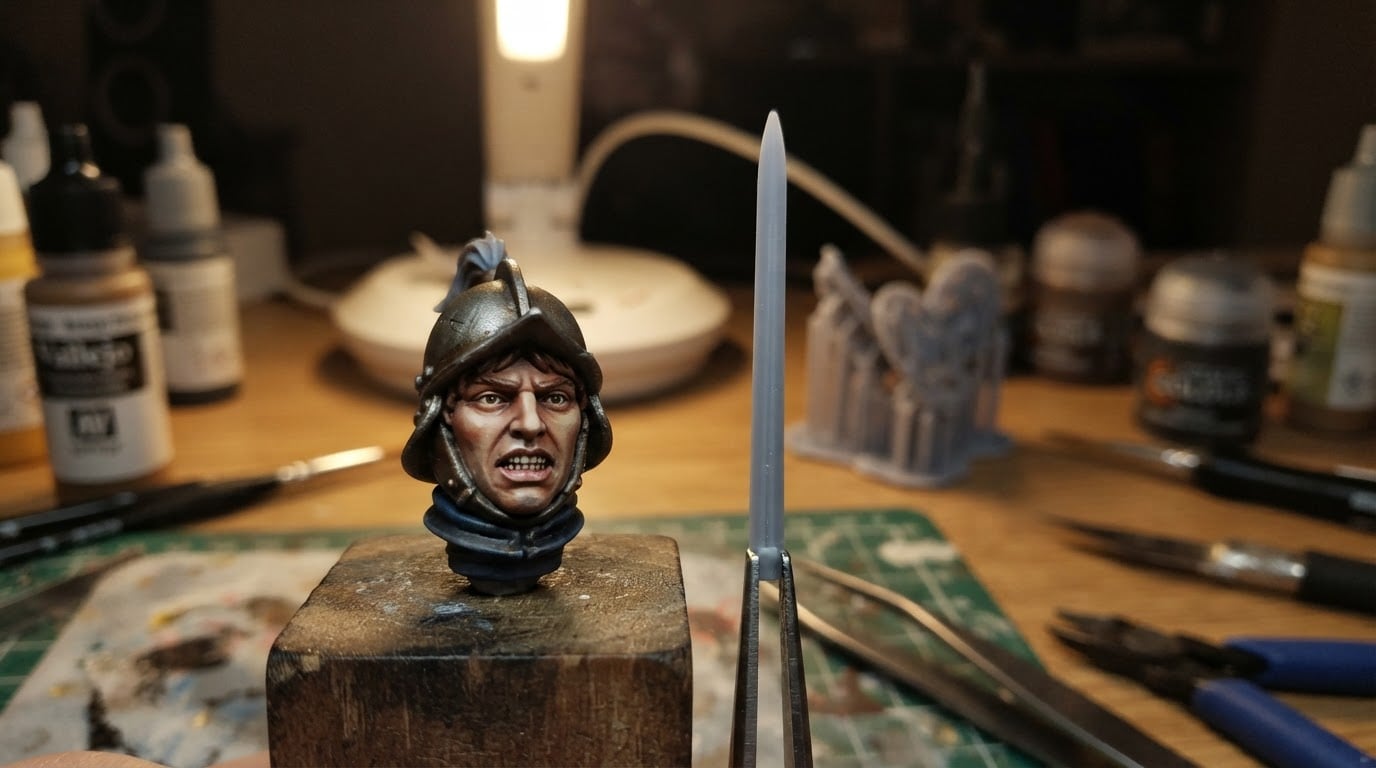
That path also does not require a hobby room. This guide assumes the apartment-workbench version of the hobby: a kitchen table, a desk, or a lap tray; a 45-minute window after dinner; and a strong preference for gear that packs away into something you can carry with one hand.
Step 1: Pick a faction you like looking at
Faction choice is the one decision you keep for years, so make it with your eyes and your taste, not with a win-rate table. The rules and the balance shift constantly. Your affection for a particular flavour of armoured super-soldier, scrappy alien horde, ancient robotic legion, or gothic zealot does not.
Do it in this order:
- Open the official faction gallery and look at the painted miniatures with no stats in front of you. Which two or three make you stop scrolling?
- Read one short summary of each faction's story — grim, noble, tragic, or gleefully stupid. You want the one whose premise makes you smile.
- Ignore "beginner-friendly" and "top tier" rankings for now. A faction you love gets painted; a faction you picked for its win rate becomes a grey shelf.
You are done with this step when you can name two factions you would be happy to own — not when you have read every wiki page. If the lore feels like homework, that is a sign to try the books or video games first and come back to the tabletop when a faction grabs you.
Step 2: Buy one small box, then stop
Two sensible first buys exist. A starter set is the usual on-ramp, and a single infantry box is the cheapest way to find out whether you enjoy the build-and-paint loop at all. Because what a starter box contains and what it costs change with every release, check the official Warhammer site or ask the staff at a local game store for the current contents and price before you order. Do not guess from older articles, and do not let anyone talk you into an army.
A rule that saves beginners a lot of money: finish one box before you buy the next one. The pile of unbuilt plastic is the most common way hobbies die.
Step 3: Build an apartment workbench that fits in one box
The work surface matters less than the habit of setting it up and clearing it away. A rimmed tray — a boot tray, a baking sheet, a cheap plastic lid — is the whole trick: it catches clippings and stops glue from reaching the kitchen table.
Keep the kit small and boring:
- side cutters, and a mould-line scraper or hobby knife
- plastic glue, plus super glue if you are building resin models
- sanding sticks or a fine file
- a spray primer, used near an open window, on a balcony, or outside
- four to six paints, one base brush, one detail brush, a water pot, and paper towels
- good light: a small desk lamp with daylight-balanced, high-CRI output makes more difference than any brush upgrade, and a window is even better
You are done with this step when everything fits back into one box you can carry with one hand, and nothing on the table is permanent.
Step 4: Assemble the box, then paint to tabletop standard
Assembly is the calm half of the hobby. Clip the parts off the frame, clean the mould lines, dry-fit before you glue, and leave the model in a few sub-assemblies if a pose looks hard to reach with a brush. The instructions in the box are usually good — follow them.
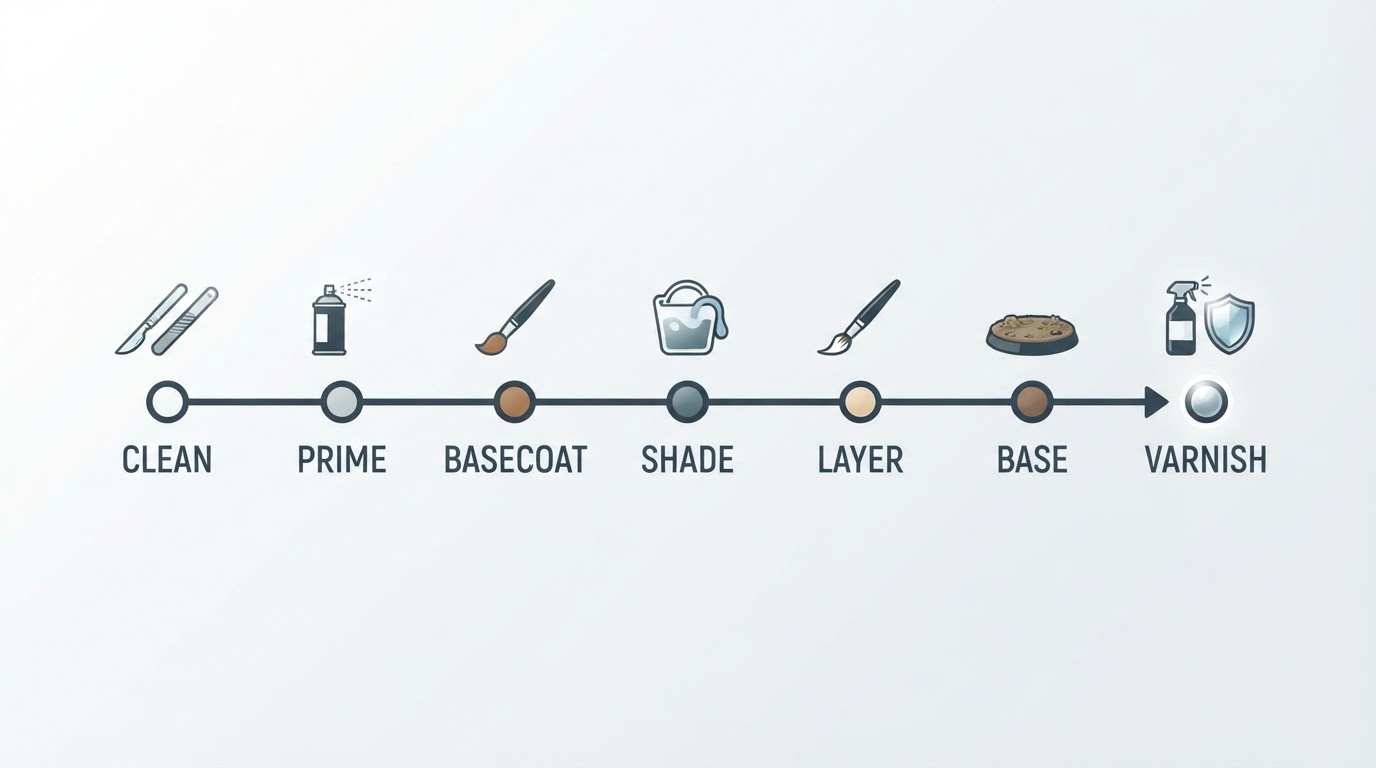
Painting follows the same logic as the purchase: start small. A simple sequence makes a first model look respectable:
- Prime in thin, short bursts. Two light passes beat one flooded coat every time.
- Block in one base colour per area: armour, skin or cloth, metal, weapon casing.
- Apply a shade or wash over the whole model so it settles into the recesses and adds instant depth.
- Drybrush or highlight the highest surfaces to bring the volumes back.
- Varnish once the paint is dry, so your first game does not chip your first paint job.
The completion standard for unit one is not box art. It is: from arm's length on the table, an opponent can tell your models apart. Two thin coats and four colours get you there. Nobody at a club is inspecting your blends while you are still learning the rules.
Step 5: Learn the rules only as deep as your first game
Warhammer 40,000 rules arrive in two layers: the shared turn sequence that both players use, and the army layer — the rules for your specific faction's units and abilities. Learn the shared layer first and let the army layer arrive game by game.
The fastest, cheapest way through is a learning game with an experienced player. Ask a local game store or club what a learn-to-play session uses, and ask where the current core rules live, since the format and packaging change between editions. Read the core rules once, then put them down. The turn sequence sticks after two games in a way it never does after two readings.
If nobody local can teach you, watch one battle report to see the rhythm, then play a small game with a friend who is also new. Reading the sequence aloud while you play is normal for the first few games.
Step 6: Play one small game, on a small table
Ask what the current small-format game is called and what it includes. The packaging changes between editions, and this is exactly the kind of detail worth checking rather than guessing. A small-format game sets a modest model count, fits in an evening, and is the right size for a kitchen table or a store table.
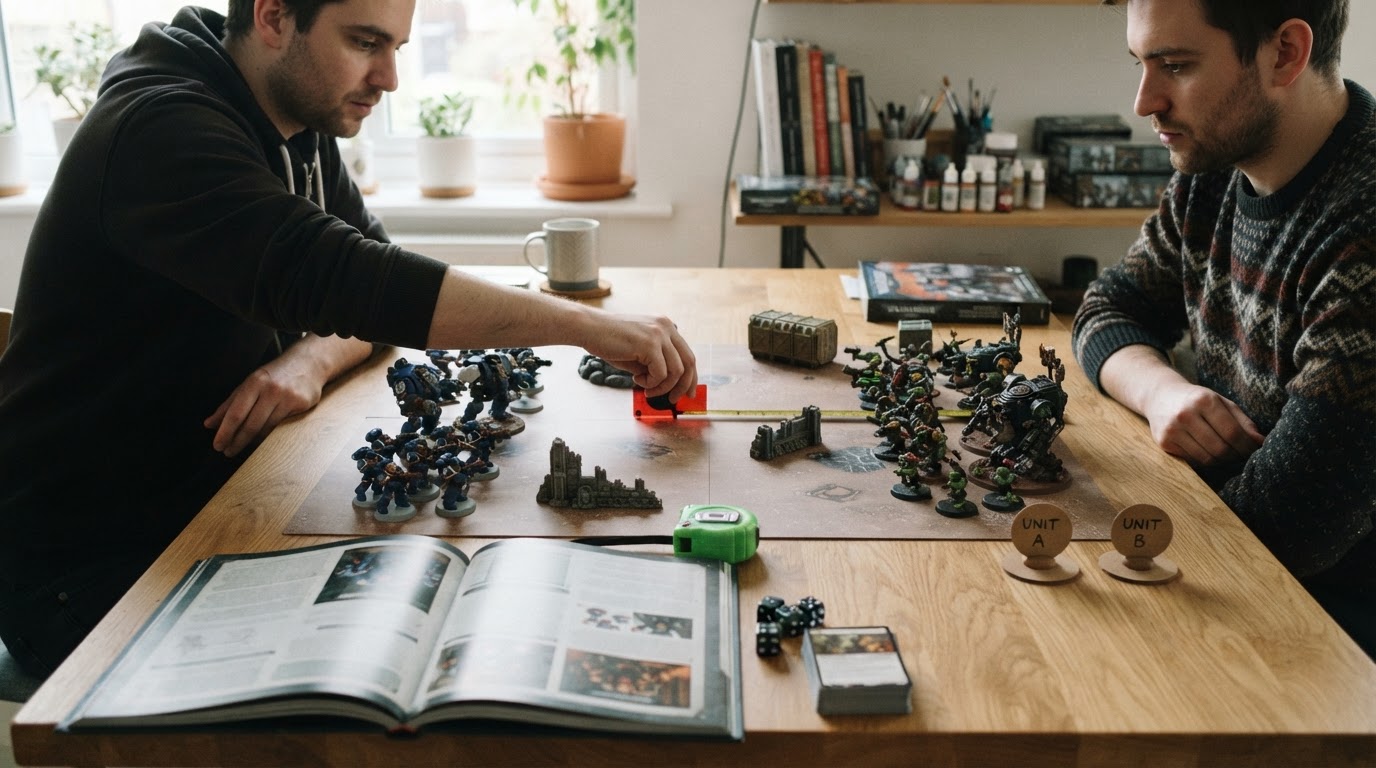
Two permissions worth giving yourself at this stage:
- Bare plastic and primed models are fine while you learn. Most casual players will happily play against unfinished miniatures; organized events usually require painted armies, so check before you sign up.
- Stand-ins are fine while you learn. If a unit is not built yet, use a spare base or a marked token, as long as both players agree before the game starts.
You are through the door when you have played one small game with models you built and painted yourself — even if the paint is three colours and the game takes three hours.
On-ramps for lore and video games
You do not have to play the tabletop game to enjoy Warhammer 40,000, and plenty of people never do. The setting is carried by novels and video games, and both are legitimate first doors.
For books, the standard advice is to skip the wikis and read a novel. One Nerdy Dad's own tabletop guides cover this ground in more detail, including a beginner walkthrough for the game and a reading-order guide that suggests starting with Dan Abnett's Eisenhorn trilogy and Gaunt's Ghosts.

Guides category page: category header plus grid of how-to article cards with featured images and excerpts (English UI).
For video games, pick by the kind of play you already enjoy rather than by canon. Strategy, squad-based action, and story-driven role-playing games all exist in the 40K universe, and most of them explain what you need as they go. Check the official Warhammer site or your platform store for what is currently available, and treat the game as a tour of the setting rather than a replacement for the tabletop rules.
Your first-month checklist
- Week 1: choose a faction, buy one box, and assemble a tray-based workbench.
- Week 2: build the whole box, clean up the mould lines, and prime everything when the weather allows.
- Week 3: paint to tabletop standard — base colours, one shade, one highlight, varnish.
- Week 4: read the core rules once, then book or play one small game.
The month is a success if, at the end, you can set up a small game from your own single box and explain the turn sequence to someone else. That is the finish line for getting into the hobby. Armies, terrain, and display pieces are later chapters.
Common beginner mistakes
- Buying an army before finishing one box.
- Choosing a faction on win rate instead of looks and story.
- One thick coat of paint instead of two thin ones.
- Trying to match box art on the first model.
- Jumping straight into a full-size game instead of a small learning game.
- Working without a tray, then finding clippings in the carpet for a month.
- Spraying primer indoors with the windows shut.
- Waiting until everything is "ready" before playing a single game.
FAQ
How much does it cost to get into Warhammer 40K?
It depends on where you live, what the current starter box contains, and which retailer you use, and prices change with each release. Check the official Warhammer site or a local game store for today's numbers. The one-box approach keeps the first step small.
Do I need to paint my models before I can play?
No. Bare plastic is fine for learning games and casual play. Organized events usually require painted armies, so ask the organizer before you enter one.
Which faction is easiest for a beginner?
The one you want to paint. Every faction has a learner-friendly path; none of them is easy while you are also learning to thin paint and read a rulebook.
Can I start with the books or the video games instead?
Yes. Novels and games are a complete on-ramp to the setting on their own, and many players stay there. The tabletop will be waiting if you want it later.
How long until I can play a real game?
You can play a small game the same week you open your first box, as long as one player knows the core rules. Painting is a parallel hobby, not a prerequisite.